Investment Planning: Private Equity and Hedge Funds Stumble
Learn why institutional investors are rethinking private equity and hedge funds amid rising fees, weaker returns, and liquidity concerns.
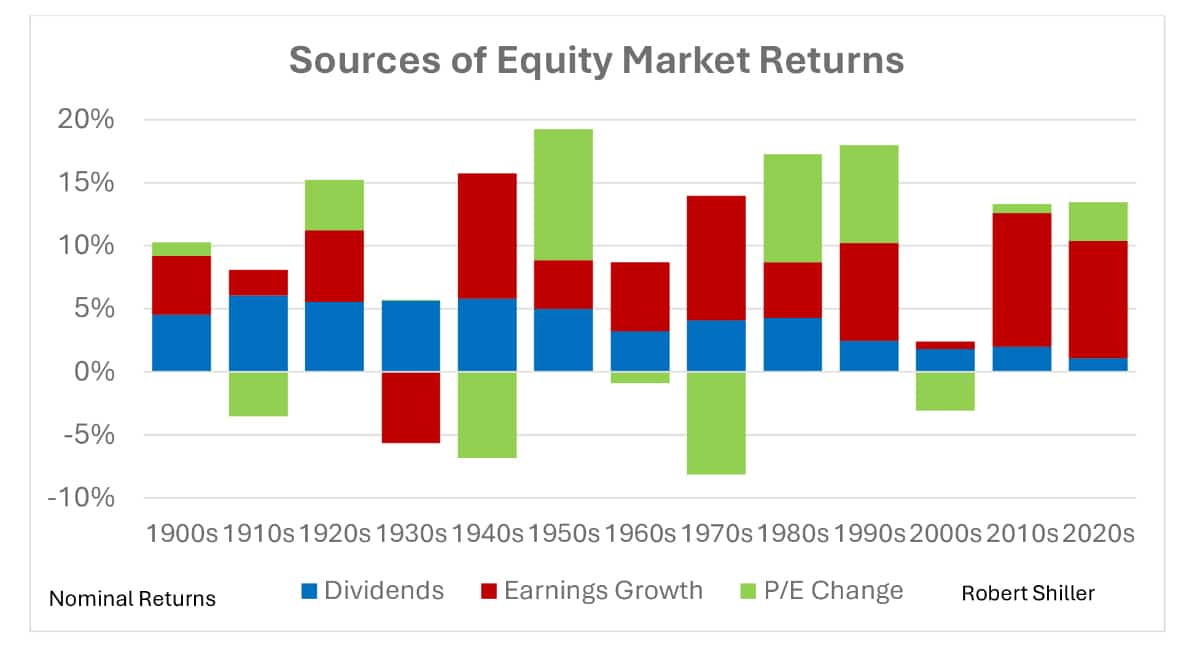
What has driven equity market performance in the past? About 40-50% of returns have come from Dividends historically, although in recent decades that proportion has shrunk substantially. Earnings Growth has been a consistent driver of returns, and especially large over the last 15 years. Then, there is P/E Change, a measure of how bullish investors are because it is driven by how much investors are willing to pay for stocks today based upon their assessment of their future performance. P/E Change since 1900 has contributed only about 1% to equity market returns, but over the past five decades, it has contributed about 3.4% or 28% of the return of the S&P 500.
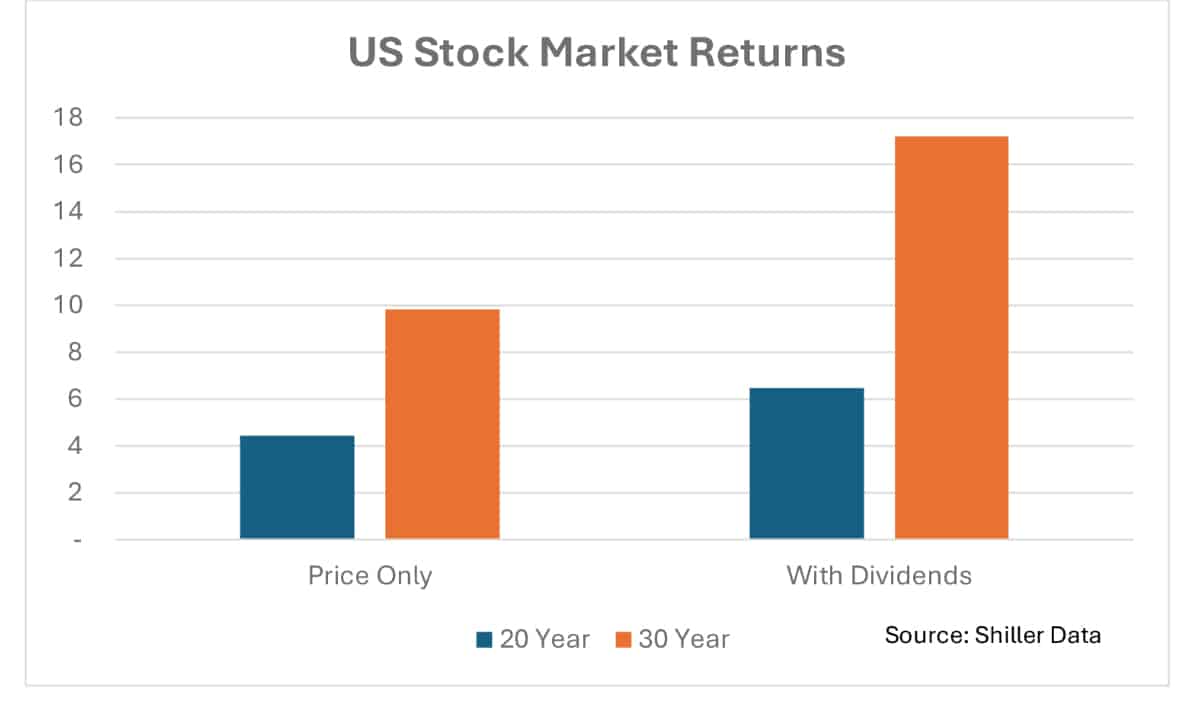
Over time the reinvestment of dividends can make a significant difference in total returns. Over the past 20 years, the market has grown 4.4 times in price terms; with reinvested dividends it has grown 6.5 times. Over 30 years in price terms the market rose 9.8 times, vs. 17.2 times with all dividends reinvested.
Of course, these strong returns require the reinvestment of dividends back into the market. Some investors favor dividend paying stocks because of the income that they generate, but remember that there is no free lunch: the stock price declines by the amount of the dividend to be paid when the stock begins to trade “ex-dividend”. Also be careful not to confuse this analysis of the importance of dividends to market returns with expected returns of high dividend paying stocks vs. those that pay low dividends, or no dividends.

Learn why institutional investors are rethinking private equity and hedge funds amid rising fees, weaker returns, and liquidity concerns.

Retirement income planning goes beyond investing. Learn how to create a sustainable strategy designed to support long-term financial stability.

One of the fastest-growing concerns today is the use of artificial intelligence (AI) to carry out more sophisticated and convincing fraud schemes.

Smart retirement tax planning can help minimize taxes, manage income, and support a more stable financial future.